Answer
Nov 10, 2025 - 07:07 AM
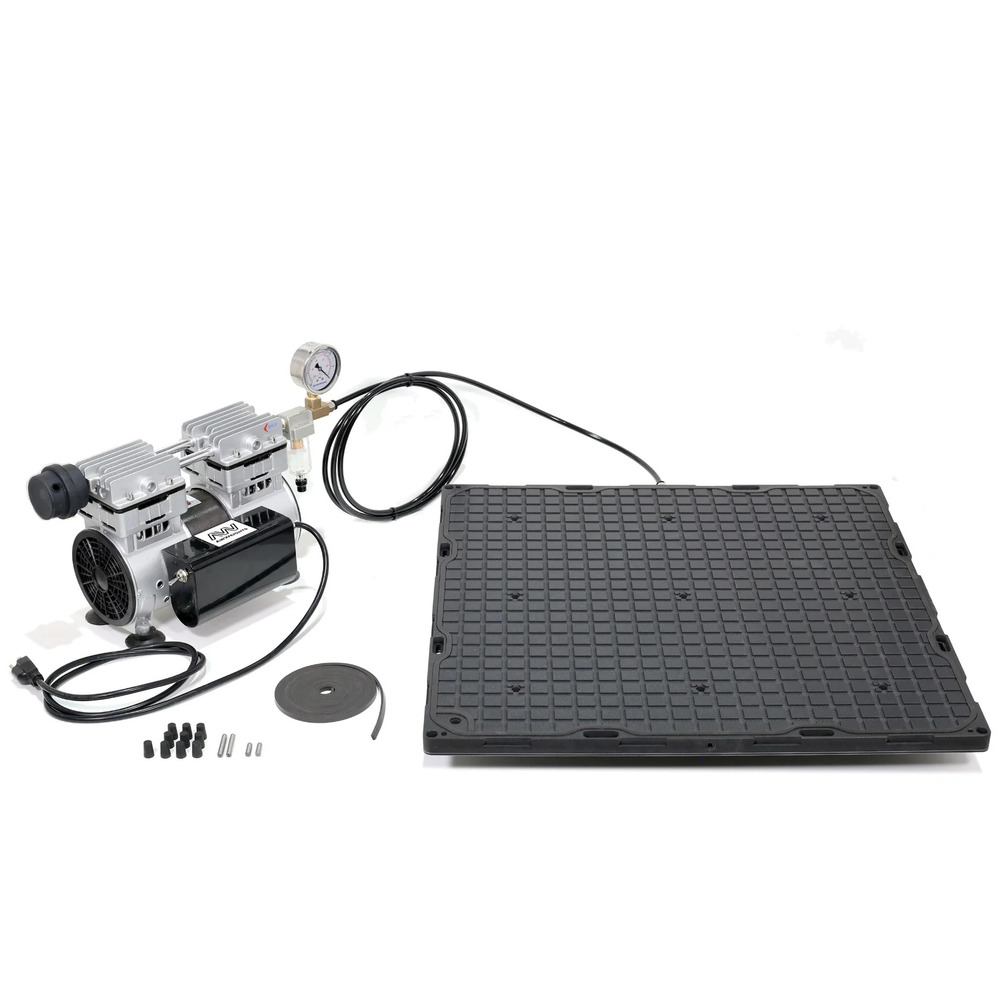
The flatness of AirWeights vacuum tables is designed to be highly durable and resistant to change over time due to their construction and recommended usage practices. The tables are built using high-strength aluminum alloy honeycomb cores, which makes them lightweight yet capable of handling significant loads without deformation, a key factor in maintaining long-term flatness.
Key factors and considerations regarding the flatness over time:
- Initial Flatness: While the precise initial flatness rating in microns for AirWeights tables is not specified in the snippets, similar high-end industrial aluminum vacuum tables often maintain flatness within 10 to 20 microns (0.0004" to 0.0008") and exhibit minimal deflection under a 30kg load (less than 10 microns). The AirWeights design is compact and robust, suggesting a high standard of initial precision.
- Material Strength: The all-aluminum construction provides excellent structural stability, which is crucial for resisting warpage or changes in dimension under typical workshop conditions.
- Maintenance of Flatness: The primary method for ensuring ongoing flatness with AirWeights tables involves using an MDF spoilboard which can be surfaced regularly.
- The installation instructions suggest that you may face your spoilboard before installing the locating pins to ensure it's perfectly flat to the machine's gantry.
- Any minor wear or deflection that occurs with use is typically addressed by periodically re-surfacing the spoilboard, which acts as the sacrificial top layer.
- Proper Use: Adhering to the manufacturer's guidelines, such as using appropriate gasket materials and securing the table properly to a flat base, helps prevent operational stress that could potentially compromise the flatness.
In essence, the AirWeights table itself is a structurally sound base designed for long-term dimensional stability. Its operational "flatness" is effectively maintained through the use of a renewable, surfaceable spoilboard, ensuring consistent performance over many years of use.